

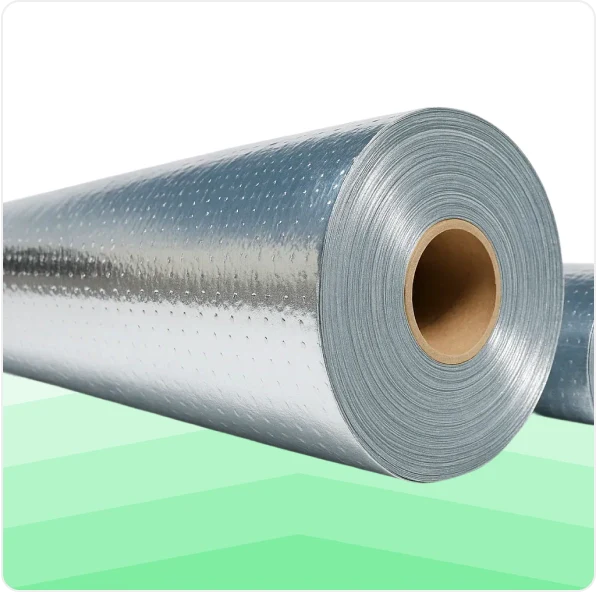


A metal building has a thermal problem that traditional insulation alone can't solve. The steel envelope conducts heat in fast during summer and out fast during winter. And whenever warm interior air contacts cold metal panels, condensation forms on the inside. This leads to rust, corrosion, and even mold. R-value matters, but for a metal building, controlling moisture, blocking radiant heat, and sealing air leaks matter just as much.
In this guide, you’ll learn how to insulate a metal building from start to finish, including both new builds and retrofits. You'll find the tools and materials you need, install methods for both scenarios, and why reflective foam-core insulation is the right choice for steel envelopes.
Why Insulating a Metal Building Is Different
Metal buildings need insulation that does three jobs at once: block radiant heat, prevent condensation, and seal air leaks.
That's because steel transfers heat much faster than wood or masonry. In summer, uninsulated panels pull solar heat into the building, making interiors uncomfortably hot. In winter, those same panels cool fast and trigger condensation (the "sweating" effect) wherever warm interior air meets the cold steel.
The goal of metal building insulation isn't only to add R-value. It's to control moisture, reflect radiant heat, and prevent air movement through the envelope. Standard fiberglass batts can't do all three on their own.
The Best Insulation for Metal Buildings
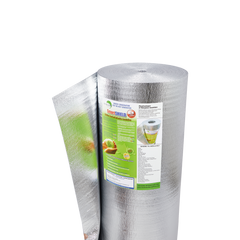
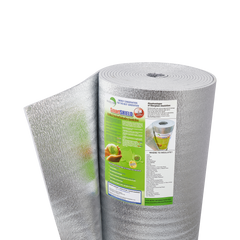
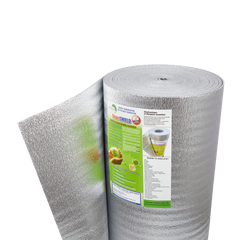
A foam-core reflective insulation is the most effective option for a metal building. It combines three functions in a single layer: a radiant barrier, a vapor barrier, and a thermal break.
SmartSHIELD reflects up to 95% of radiant heat, resists moisture and mildew, and won't compress or sag like fiber-based insulation can over time.
Recommended Products
- SmartSHIELD 10mm Foam Core Reflective Insulation: heavy-duty option with heat-weldable seams for a complete vapor seal. The most popular choice for most metal building installs.
- SmartSHIELD 20mm Foam Core Reflective Insulation: maximum performance for larger commercial buildings or climate extremes.
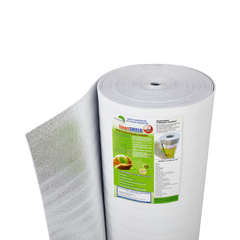
- SmartBUBBLE: a lighter alternative for budget-sensitive projects.
Tools and Materials You'll Need
Before starting, gather these tools and materials.
Materials
- Reflective tape: seals seams, prevents air leaks, and maintains the vapor barrier. Not required if you're heat-welding 10mm seams.
- Double-sided tape: holds insulation in place during installation.
- Metal pins and caps: secure insulation to surfaces without drilling (retrofit applications).
- Self-drilling screws and 1.5" locking washers: for fastening to tubular framing.
- Super metal sealant: bonds pins to steel where drilling isn't possible.
Tools
- Utility knife: for clean, accurate cuts.
- Heat gun: heat-welds SmartSHIELD 10mm seams. Start at the lowest setting and turn up until the foam edge of the roll becomes pliable.
- Screw gun: for tubular framing retrofits.
- Measuring tape: for planning the cut layout.
Quick Tip
A continuous, sealed insulation layer is what stops condensation and delivers full thermal performance. Always tape or seal seams and edges, except where you've heat-welded the 10mm seams.
How to Install Insulation in a New Metal Building (Over Framing)
For new builds, the insulation goes on before the sheeting. Follow these five steps.
Step 1: Apply Double-Sided Tape to Purlins
Run a strip of double-sided tape along the top of each purlin. This keeps the insulation from shifting in the wind during installation.
Step 2: Unroll Insulation Perpendicular to Framing
Roll the insulation across the purlins or girts at a perpendicular angle. The perpendicular orientation works regardless of the framing spacing.
Step 3: Allow a 1 to 2 Inch Sag for the Air Gap
Let the insulation sag slightly (about 1 to 2 inches) between purlins. The small sag creates the air gap that makes reflective insulation perform. Corrugated sheeting provides some air space even when the insulation is pulled tight, but a slight sag is optimal.
Step 4: Seal Seams
Seal every seam with reflective tape. If you're using SmartSHIELD 10mm, you have the option of heat-welding seams instead with a heat gun for a stronger vapor seal.
Step 5: Install Metal Sheeting
Attach the metal sheeting over the insulation layer. The result is a continuous thermal and vapor barrier with the air space the system needs to perform.

How to Retrofit Insulation in an Existing Metal Building
If the building is already sheeted, you can still insulate it effectively. The right method depends on the framing type.
Tubular Framing
- Apply double-sided tape (optional) to the tubular frames for a temporary hold of the insulation. This makes it easier to fasten with screws.
- Run insulation perpendicular to the frame members. Start in a corner, place the roll on the floor, and unroll along the wall until you reach the next corner.
- Attach with ¾" self-drilling screws and 1.5" locking washers at the top and bottom of the roll wherever it crosses a tubular frame. This creates a ~2.5" air gap between the insulation and the sheeting.
- Seal all seams with reflective tape, or heat-weld if you're using 10mm.
I-Beams, Z-Purlins, or C-Purlins
When drilling through the framing isn't possible, choose one of these three methods:
- Glue with pins and caps: bond metal pins to the sheeting with super metal sealant. Then press the insulation onto the pins and lock with caps.
- Wood furring strips: build out the inside of the wall to create a straight, drillable fastening surface.
- Tape and sealant combo: apply double-sided tape next to a bead of super metal sealant under the framing. The tape holds short-term; the sealant bonds long-term. This is the least effective of the three methods and best used only when the others aren't feasible.
Maintain at least a ¾" air gap between the insulation and the sheeting, and seal all seams for full condensation control.


Common Installation Mistakes to Avoid
A few mistakes will sabotage even the best reflective insulation:
- No air gap. Installing the insulation flush against the metal eliminates the air space the reflective foil needs to work.
- Unsealed seams. Even small gaps in the seams break the vapor barrier and let condensation through.
- Poor moisture path planning. Adding reflective insulation behind existing fiberglass without thinking about where moisture will go can trap water against the steel.
- Ignoring air leak points. Base plates, door headers, and corner trim are the biggest air leak paths in a steel building. Seal them.
Why SmartSHIELD Outperforms Other Metal Building Insulation
Fiberglass absorbs moisture, loses R-value over time, and can support mold growth and pest nesting. Spray foam doesn't address radiant heat (the dominant heat transfer mode in a steel building), and is significantly more expensive to install. Single or double bubble insulation works at first, but the bubbles can collapse under heat over time, reducing performance.
SmartSHIELD combines a radiant barrier, a vapor barrier, and a closed-cell core in a single product. It reflects up to 95% of radiant heat, seals around screws and staples, and doesn't degrade from moisture or pests. It's an all-in-one system engineered specifically for steel buildings, metal garages, barns, workshops, and light commercial spaces.
Browse Metal Building Insulation Products
Insulation MarketPlace stocks the full SmartSHIELD range alongside the rest of our reflective insulation lineup. Every product is ASTM and ISO certified, Class A fire-rated, and backed by our 10-year warranty and 60-day money-back guarantee.
Find the right insulation for your project today. Browse the SmartSHIELD collection to compare thicknesses, or contact our team for help with bulk orders and contractor pricing.
FAQs About Insulating a Metal Building
Do I need to insulate a metal building?
For any metal building that will be occupied, heated, cooled, or used to store temperature-sensitive items, insulation is essential. Without it, the steel envelope will produce extreme summer heat, winter cold, and persistent condensation that damages contents and the structure itself.
What R-value do I need for a metal building?
The R-value depends on your climate zone, building use, and local energy code. The U.S. Department of Energy publishes recommended R-values by zone. SmartSHIELD product pages list the R-value for each thickness and application. Check the spec sheet for the product you're considering.
Can I install SmartSHIELD over existing fiberglass insulation?
Yes. SmartSHIELD layers cleanly over existing fiberglass or rigid foam in a retrofit. It adds the radiant barrier and vapor barrier that fiber-based insulation can't provide on its own. The combination often delivers a noticeable improvement in HVAC performance.
Does reflective insulation work in cold climates?
Yes. Reflective insulation works year-round. In winter, the foil reflects warm interior heat back into the building rather than letting it escape through the metal envelope. The mechanism is the same as in summer. Only the direction of heat flow changes.
How do I stop condensation in a metal building?
Condensation forms when warm interior air contacts cold metal panels. The fix is to put a continuous vapor barrier between the air and the steel. Reflective foam-core insulation does this, provided seams are properly sealed. Add controlled ventilation to manage residual moisture.