

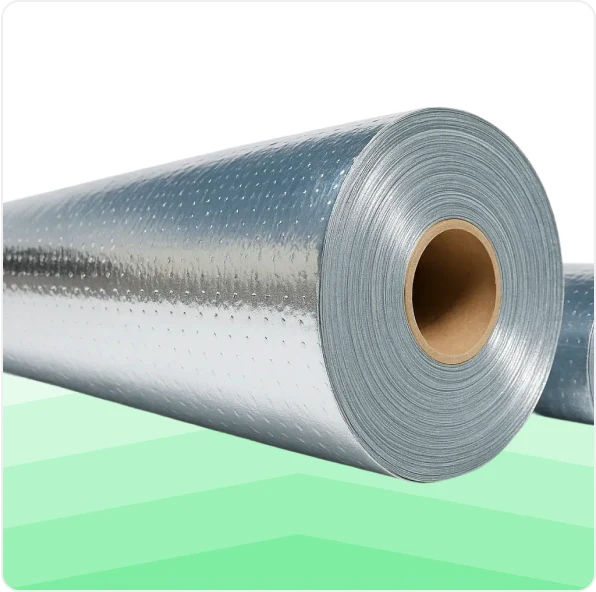


Radon is a naturally occurring gas that seeps up from the ground, and at high indoor levels it's a real health risk. A radon barrier blocks it before it enters your living space, and a reflective barrier does double duty by adding a vapor seal and thermal protection at the same time. This guide covers both the floor and the exterior wall.
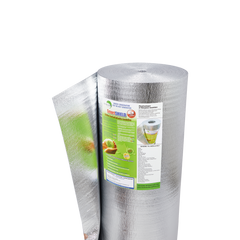
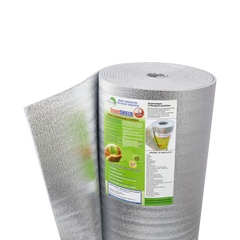
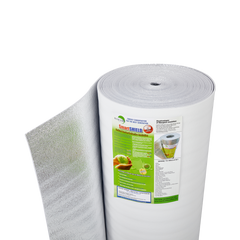
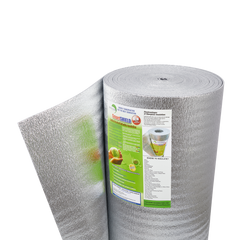
Product to use: SmartSHIELD 5mm White Film or Reflective White SmartBUBBLE. Both give you a radon and vapor barrier with added thermal resistance, and both cost less than a lead barrier.
Tools and Materials
- SmartSHIELD 5mm White Film or Reflective White SmartBUBBLE
- Multi-purpose adhesive
- Under-concrete seam tape
- Caulking and caulk gun
- Utility knife and a straightedge
- Tape measure
Before You Start
- This is most useful in basements and crawl spaces, where radon entry from the ground is a concern.
- Make sure surfaces are clean and dry before you seal anything down.
- Plan to seal continuously. A radon barrier only works if every seam and edge is sealed.
Step-by-Step Radon Barrier Insulation Installation
Floor
Install the barrier under the slab.
Follow the same method used for insulating under a concrete slab: roll the material out white side up, overlap seams, and run it up the walls. Make sure you seal it along the wall so there's no gap for gas to enter.

Exterior Wall
Step 1: Install the barrier against the wall.
Install SmartSHIELD 5mm White Film or Reflective White SmartBUBBLE with the white side against the wall, holding it in place with a multi-purpose adhesive.
Step 2: Seal the seams.
Seal all seams with under-concrete tape so the barrier stays continuous.
Step 3: Caulk the base.
Seal with caulking at the bottom and at ground level on the foundation wall. This is the critical seal that stops gas from entering at the base.

Quick Tips
- The seal is everything. A radon barrier with unsealed seams or an unsealed base won't do its job.
- White side faces the wall on the exterior-wall application.
- Because this is also a vapor barrier, it helps control moisture and mold in the same spaces where radon is a concern.
Frequently Asked Questions
Does a radon barrier really need to be sealed everywhere?
Yes. Radon is a gas, so any unsealed seam or edge is a path inside. Seal every seam and caulk the base.
Is this cheaper than a lead barrier?
Yes. SmartSHIELD gives you radon protection, a vapor barrier, and added thermal resistance for less than a traditional lead barrier.
Can it go in a crawl space?
Yes. Basements and crawl spaces are the most common places to use it, since that's where ground gas enters.
Need Help Choosing?
Not sure how much you need or which product fits your space? Explore SmartSHIELD at Insulation MarketPlace, or call our team at (786) 202-0704 and we'll point you to the right fit. Every order ships free in 2 to 4 days.