



If you own or are planning a metal building, insulation is one of the most important decisions you will make. At the center of that decision is one number: the R-value.
Understanding what R-value means and which level is right for your building can save you money on energy bills and keep your space comfortable year-round.
What Is the R-Value for Metal Building Insulation
R-value measures how well an insulation material resists heat flow. The higher the R-value, the better the insulation performs at slowing heat transfer through walls, roofs, and floors.
For metal buildings, R-values typically range from R-8 to R-30 depending on:
- Insulation type
- Installation method
- Climate zone
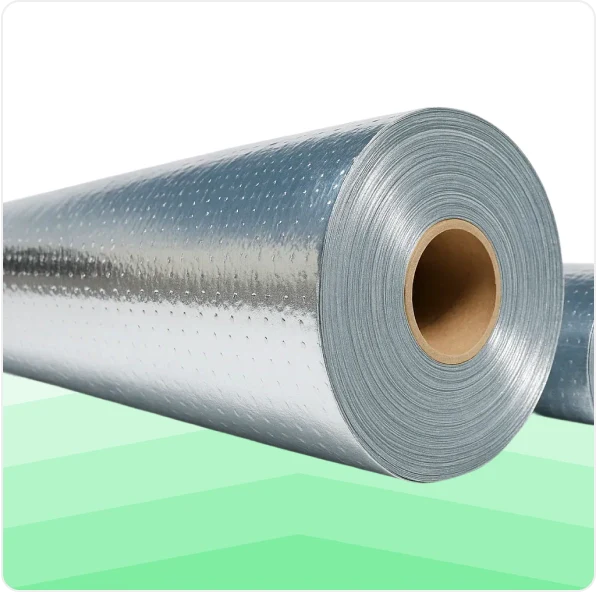
Traditional fiberglass falls between R-13 and R-19, while reflective insulation like SmartSHIELD achieves system R-values up to R-22 or higher, rated under real installation conditions including air gaps, not just lab thickness.

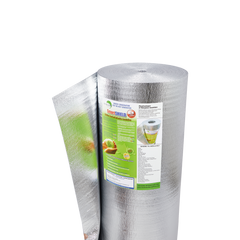
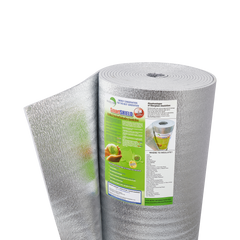
SmartSHIELD foam core reflective insulation — rated up to R-22 under real installation conditions, including air gaps.
Labeled R-value vs. installed R-value — what's the difference?
The label on a package shows the product's rated resistance at full thickness. Fiberglass can lose significant performance once installed due to:
- Compression under metal clips and fasteners
- Gaps in coverage
- Thermal bridging through steel framing
Reflective insulation does not compress, does not sag, and reflects radiant heat directly at the source, making it the more reliable choice for metal structures.
Why R-Value Matters in Metal Buildings
Metal conducts heat roughly 400 times faster than wood. Without proper insulation, a metal building loses or gains heat very quickly, forcing your heating and cooling system to work harder and driving up energy costs.
Steel purlins and girts create what is known as thermal bridging. Heat travels along these metal members and bypasses the insulation entirely. Even a well-rated product may perform 30 to 50 percent below its labeled R-value after installation in a typical metal building.
Choosing the right R-value and the right insulation system helps your building:
- Meet local energy codes
- Lower long-term operating costs
- Protect the structure from moisture and condensation damage
Recommended R-Value for Metal Buildings
The right R-value depends on your climate zone, building use, and which part of the structure you are insulating.
|
Location |
Recommended R-Value |
|
Walls (Climate Zones 1-3) |
R-13 minimum |
|
Walls (Climate Zones 4-7) |
R-13 + continuous exterior insulation |
|
Roofs / Ceilings |
R-19 to R-30+ (liner system recommended) |
|
Cold climate roofs |
R-30 or higher |
By building use:
- Residential metal home: Highest insulation levels for comfort and energy code compliance
- Commercial building: Must meet IECC commercial minimums for your zone
- Agricultural / storage: Minimal insulation may be acceptable; check local code
Always check your local energy code to confirm the minimum R-value for your building type and location.
Factors That Affect R-Value in Metal Buildings
Climate and Geographic Location
Your climate zone determines the minimum R-value required by code and what you need to stay comfortable. Warmer southern zones need insulation primarily to reduce heat gain. Colder northern zones need high R-values to prevent heat loss in winter. Mixed climates need a balanced approach for both heating and cooling seasons.
Building Design and Usage
A warehouse with minimal temperature control has different needs than a workshop where people work daily. The size and shape of the building also matter, as larger roof areas mean more heat loss through the top of the structure.
Insulation Placement and Installation Quality
Even a high-rated product will underperform if installed incorrectly. Gaps in coverage let heat bypass the insulation. Compression crushes out the air pockets that give insulation its resistance. Proper installation is just as important as choosing the right R-value.

Types of Insulation and Their R-Values
Fiberglass Insulation
Fiberglass batt is the most common starting point for metal building insulation. A single layer with a vinyl vapor retarder facing delivers R-13 to R-19 and is straightforward to install.
Key limitations in metal buildings:
- Compresses under metal clips and fasteners, reducing effective R-value
- Moisture absorption lowers performance over time
- Does not block radiant heat from metal panels
- In climate zones 4 and above, a proper vapor barrier is critical to prevent condensation inside wall cavities
Spray Foam Insulation
Closed-cell spray foam is the highest R-value-per-inch option available, delivering R-6 to R-7 per inch. Key characteristics:
- Fills every gap and eliminates thermal bridging
- Serves as its own vapor barrier
- Best suited to fully conditioned spaces where top energy performance is the priority
- Higher cost and requires professional installation
Reflective Insulation
Reflective insulation works differently from fiberglass or foam. Rather than slowing conductive heat transfer, it blocks radiant heat — the energy that metal roof and wall panels absorb from the sun and radiate directly into your building.
SmartSHIELD reflective insulation is built specifically for metal building applications:
- Does not compress or sag over time
- Does not absorb moisture
- Performance is rated under real installation conditions including air gaps
- Blocks up to 97% of radiant heat

SmartSHIELD 10mm — blocks up to 97% of radiant heat and achieves system R-22, without compression or moisture absorption.
How Reflective Insulation Supports R-Value Performance
Standard R-value testing only measures resistance to conductive heat. In metal buildings, a significant share of heat gain is radiant, meaning solar energy absorbed by metal panels is radiated straight into the interior. That heat bypasses fiberglass and foam entirely.
A properly installed reflective layer blocks up to 97% of radiant heat. In hot and mixed climates, combining SmartSHIELD with a solid base-layer R-value product gives you more complete thermal protection than either type alone, and better energy performance per dollar spent.
SmartSHIELD Solutions for Metal Buildings

SmartSHIELD 10mm Insulation
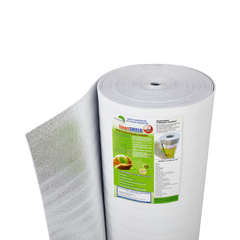
The SmartSHIELD 10mm foam core reflective insulation is designed for moderate climates and standard applications.
It combines a closed-cell foam core with reflective facing to address both conductive and radiant heat. It is a cost-effective choice for workshops, garages, and light commercial buildings in warmer to mid-range zones.
SmartSHIELD 20mm Insulation
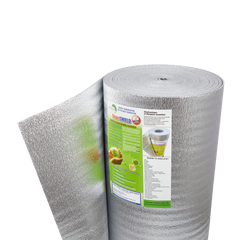
The SmartSHIELD 20mm foam core reflective insulation is built for larger buildings and higher performance needs.
The thicker foam core improves resistance to conductive heat while reflective layers continue to block radiant gain. It suits commercial, industrial, and agricultural buildings in colder or more demanding climates.
Benefits for Contractors and Builders
SmartSHIELD products come in large roll formats that cover more area with fewer seams. This speeds up installation, reduces labor time, and lowers the risk of gaps where heat can enter or escape.
How to Choose the Right R-Value for Your Project
For Homeowners and Small Buildings
Start by identifying your climate zone and checking recommended R-values for your area. For conditioned spaces in moderate to cold climates, target at least R-19 for walls and R-30 or higher for roofs. Adding a reflective layer can improve comfort without a large cost increase.
For Contractors and Commercial Builds
Verify the current IECC requirements for your climate zone and building type before specifying insulation. Look at total assembly performance, not just single-product R-value, to confirm the building meets U-factor requirements. High-performance insulation at the start of a project typically delivers lower operating costs and fewer retrofit expenses over the building's lifetime.
Wrap Up
Getting R-value right in a metal building means thinking beyond a single number. Your climate, building use, and installation quality all affect real-world performance. Both conductive and radiant heat need to be addressed for lasting comfort and efficiency.
Explore high-performance metal building insulation solutions at our store. Choose insulation that balances performance, installation efficiency, and long-term savings.
FAQs
What is the best R-value for a metal building in hot climates?
Focus on roof insulation first. A combination of R-19 or higher fiberglass with a reflective insulation layer on the underside of the roof is an effective approach. Reflective systems block radiant heat gain that standard insulation does not address.
Is higher R-value always better for metal buildings?
Not always. A high R-value product that is compressed or installed over thermal bridges may perform well below its rating. Proper installation matters as much as the number on the label.
Do metal buildings need different insulation than wood buildings?
Yes. Steel conducts heat much faster than wood, making metal buildings more vulnerable to thermal bridging. Continuous insulation and reflective systems are often combined to address this challenge effectively.
How does reflective insulation compare to traditional R-value insulation?
Traditional insulation resists conductive heat. Reflective insulation blocks radiant heat. In metal buildings with significant solar exposure, using both types together delivers better overall thermal performance.
What R-value should I use for a metal building roof?
Roof R-values should be higher than wall values due to direct sun exposure. In most climate zones, R-19 plus an R-11 liner system is the minimum required by code. In colder zones, R-30 or higher is typically needed.