



Metal buildings are fantastic for durability and open floor plans, but without the right protection, they can quickly turn into ovens in the summer and freezers in the winter.
Understanding metal building insulation cost is the first step toward creating a comfortable workspace, garage, or home that does not drain your bank account through high energy bills.
The price you pay upfront for insulation often pales in comparison to the long-term savings on heating and cooling, yet finding accurate numbers can be tricky.
Average Metal Building Insulation Cost
Pinpointing an exact price is difficult without seeing the specific structure, but general market averages provide a solid starting point for your budget. The cost varies significantly based on whether you are insulating a simple shed or a large commercial warehouse.
- Expect to pay between $0.50 and $2.50 per square foot for basic fiberglass batts or rolls, which are common but can be tricky to install correctly in metal structures.
- Spray foam insulation typically commands a higher price, often ranging from $1.50 to over $4.50 per square foot, depending on whether you choose open-cell or closed-cell varieties.
- Reflective insulation generally falls into a cost-effective range of $0.50 to $2.20 per square foot, offering a high return on investment due to its radiant heat-blocking capabilities.
- New construction projects often see lower insulation labor costs per square foot because the material is installed as the building is erected, providing easy access to wall and roof cavities.
- Retrofitting an existing metal building usually involves higher labor rates as installers must work around existing framing, electrical conduits, and potentially occupied spaces.
- Total project costs should always include the price of accessories like tape, adhesives, and fasteners, which can add 10-15% to the material budget.
What Affects Metal Building Insulation Cost
Several variables will shift your final estimate up or down. Understanding these factors helps you see where you can save money and where it makes sense to invest more for better performance.
- Total Square Footage: Larger buildings often benefit from bulk material pricing, reducing the cost per square foot compared to smaller, single-car garages.
- Material Choice: The type of insulation you select is the biggest cost driver, with simple bubble foil being more budget-friendly than high-density spray foam.
- Climate Zone: Buildings in extreme climates require higher R-values (thermal resistance), necessitating thicker or multi-layered insulation systems that increase the material expense.
- Labor Rates: Local labor markets influence installation prices heavily; hiring a professional crew in a metropolitan area will cost more than in rural regions.
- Accessibility: High ceilings or difficult-to-reach areas may require equipment rentals like scissor lifts, adding to the overall project total.
- Structure Design: Complex rooflines or buildings with many windows and doors require more cuts and detailed sealing work, increasing labor time and waste.
Why Insulation Choice Matters in Metal Buildings
Metal transfers heat fast.
When the sun hits a metal roof, heat moves straight inside—causing rapid temperature spikes and uncomfortable conditions.
Poor insulation = condensation problems.
Without proper insulation, “building sweat” can form. This moisture leads to rust, corrosion, and damage to stored equipment.
Low-quality materials don’t last.
Cheap insulation can sag or leave gaps over time, reducing effectiveness and leading to costly repairs or replacement.
Energy bills increase.
Inadequate insulation forces HVAC systems to work harder, raising monthly electricity or gas costs and shortening equipment lifespan.
Comfort depends on insulation.
A well-insulated metal building stays usable year-round. A poorly insulated one can become unbearable in peak summer or winter.
Why Reflective Insulation Works for Metal Buildings
Traditional insulation absorbs heat, but reflective insulation is designed to block it.
This difference matters in metal buildings, where radiant heat is the main cause of indoor heat gain.
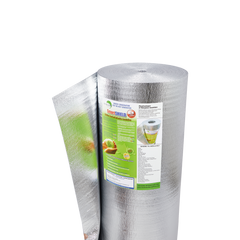
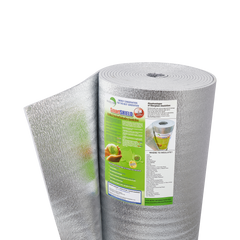
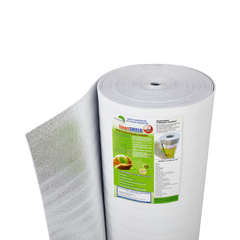
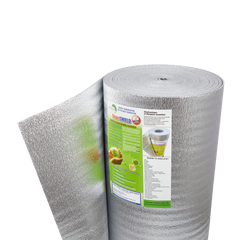
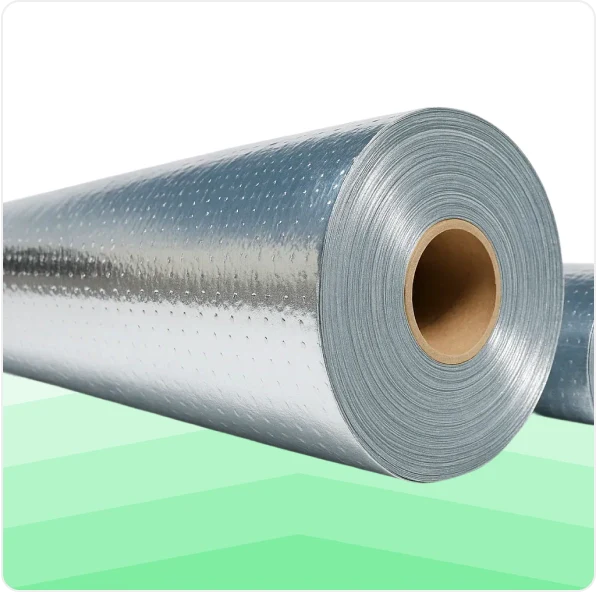
SmartSHIELD acts as a radiant barrier, reflecting up to 97% of radiant energy away from the structure. Instead of allowing the metal panels to absorb and radiate heat inward, it redirects that energy outward.
Key Benefits for Metal Structures
- Reduces radiant heat transfer
- Helps control interior temperature
- Prevents metal panels from becoming heat sources
- Minimizes condensation when seams are properly taped
- Acts as a vapor barrier
- Does not absorb moisture
- Mold-resistant
- Non-itch and easy to handle
- Installs quickly with large roll coverage
Unlike fiberglass, reflective foam core insulation is clean to install and does not require protective gear.
For those needing a balance between performance and budget, SmartSHIELD 10mm serves as an excellent solution for moderate climates, offering substantial heat rejection without excessive bulk.

If your project requires heavy-duty protection for demanding environments, SmartSHIELD 20mm provides superior thermal resistance and durability for structures facing extreme temperature swings.

Installation Efficiency and Labor Savings
One of the hidden costs of insulation is the time it takes to install. Products designed for efficiency can significantly lower the total metal building insulation cost by reducing labor hours.
Systems that roll out and staple quickly cost less than options that require framing or spraying.
SmartSHIELD comes in large rolls, reducing seams, measuring, and cutting across wide walls and roof spans.
Key installation advantages:
- Staircase edge design creates clean overlaps without bulk
- Heat sealing or taping forms a continuous barrier
- Lightweight yet rigid panels are easy to position
- Often manageable by one or two people
- Suitable for DIY installation, reducing labor costs
- Minimal waste, offcuts can be reused in smaller areas
Fewer gaps. Fewer labor hours. Lower total cost.
Planning an Insulation Budget That Makes Sense
When estimating metal building insulation cost, focus on long-term value—not just the roll price.
Cheap insulation that sags or degrades may need replacement within a few years. That doubles your expenses.
Reflective insulation maintains its thickness and performance over time because it doesn’t settle or compress like fiber-based materials.
When budgeting, consider:
- Longevity – consistent thermal performance year after year
- Energy savings – reduced heating and cooling demand
- Condensation control – protection for tools, vehicles, and inventory
- Warranty coverage – 10-year protection against defects
At Insulation MarketPlace, we ship direct from factory to eliminate middleman markups and keep pricing competitive.
FAQs
Is it expensive to insulate a metal building?
The cost is relative to the size and method, but compared to the cost of the building itself, insulation is a small percentage. Reflective insulation provides a very cost-effective entry point compared to spray foam.
Can I insulate a metal building myself to save money?
Yes, this is one of the best ways to control costs. Products like SmartSHIELD are designed for DIY application, requiring only basic tools like a utility knife, staple gun, and tape.
Does insulation really help in the summer?
Absolutely. For metal buildings, the primary heat gain is from the sun striking the roof. Reflective insulation blocks up to 97% of this radiant heat, keeping the interior significantly cooler.
What is the best insulation for preventing condensation?
A closed-cell foam or a foam-core reflective insulation is best because it acts as a vapor barrier. It prevents warm, moist air from touching the cool metal surface, which is the cause of condensation.